
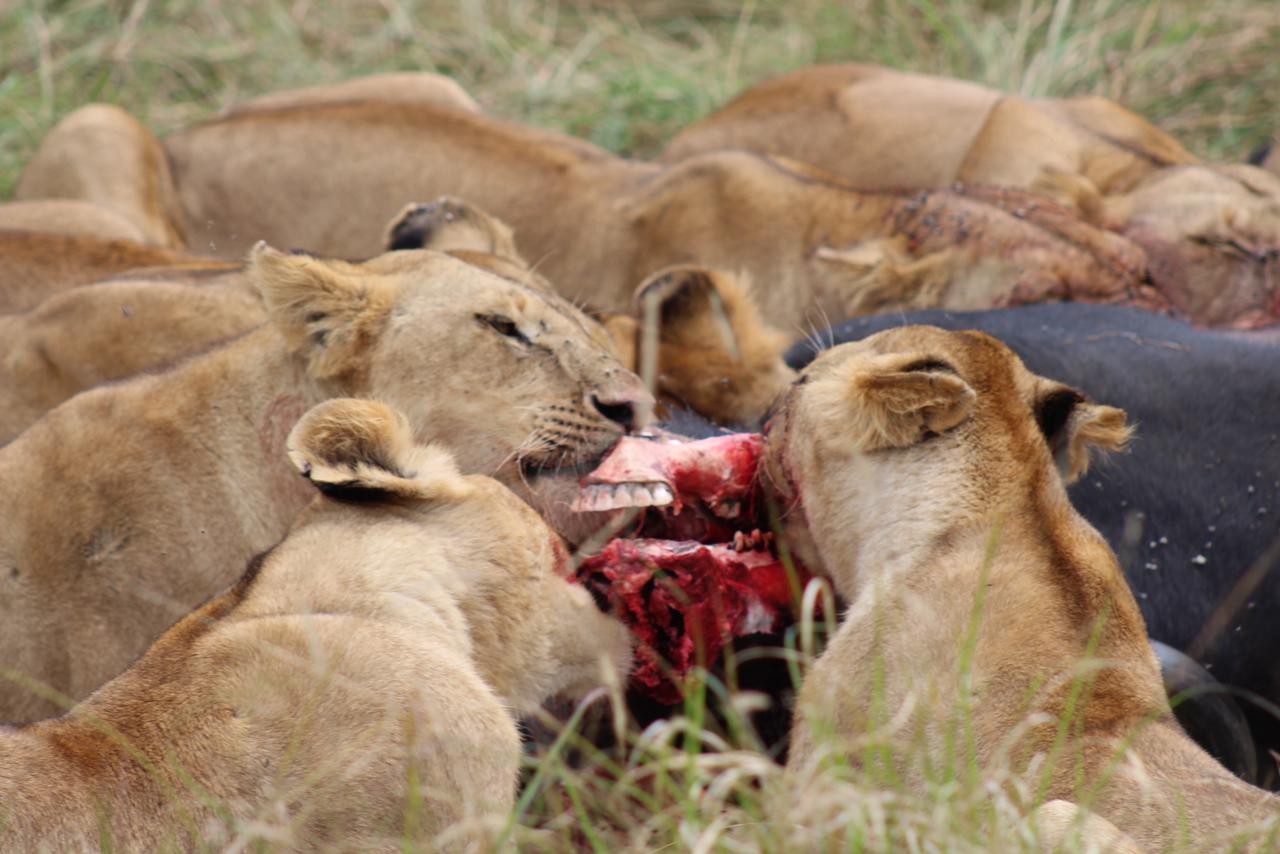
You're on a game drive. Three vehicles have just driven past the same stretch of bush. Your guide stops, stares at a patch of dry grass for a few seconds, then quietly says: "Lion. Under that tree. Two females." You look. You see nothing. Then — slowly — you see the ear twitch.
This happens all the time on safari, and it's not magic. It's years of training, pattern recognition and a deep understanding of how animals behave. A great guide doesn't just drive you around — they read the landscape like a language. Here's some of what they know that most visitors don't.
The term "Big Five" originally referred to the five most dangerous animals to hunt on foot: lion, leopard, elephant, Cape buffalo and rhinoceros. Today it describes the five animals every safari visitor most wants to see. All five are present in the Maasai Mara.
The Clues Guides Read Every Drive
Before finding any specific animal, a good guide is constantly reading the environment. Every bird, every herd movement, every smell is information. Here are the main signals they track:
-
Vultures circling or descending
Vultures circling low usually means something has died or is being killed below. A guide will drive toward them immediately. Vultures descending in a tight spiral means they've spotted a fresh kill from the air.
-
Alarm calls from prey animals
Zebra, impala, baboons and birds each have specific alarm calls when they detect a predator. An experienced guide can identify which animal is calling, what it's calling about and roughly where the threat is — just from the sound.
-
Fresh tracks and dung
Tracks in soft mud or dust tell a guide what animal passed, which direction it was heading, how large it was and roughly how recently. Fresh dung — still warm, still moist — means the animal is close. This is especially useful for tracking elephant and buffalo.
-
Disturbance in vegetation
Broken branches, flattened grass, scrape marks on a tree — all signs that a large animal has passed through. A leopard will often leave claw marks on a favourite scratching tree. Elephant leave a trail of destruction that's easy to follow.
-
Radio communication between guides
When one vehicle finds a sighting, guides share the location over radio. This is especially useful for rare sightings — rhino, wild dog, a leopard in a tree. Your guide is always listening to what's happening across the reserve.
Each Animal — How Guides Find Them
Lions spend up to 20 hours a day resting. In the morning they are often visible in open ground or on termite mounds. By midday they move into shade — under acacia trees, in riverbed vegetation. Guides look for the ear, the tail tip or the outline of a belly against the ground. A resting lion looks almost exactly like a rock or a log from a distance. Once you've trained your eye, you start seeing them everywhere.
Leopard are solitary, largely nocturnal and world-class at staying hidden. The best time to find one is very early morning before the heat of the day drives them into cover. Guides know the favourite trees in their area — a leopard will use the same tree repeatedly, often with a kill hanging in the branches. Look for a dangling tail or the shape of spots in dappled light. Alarm calls from baboons or impala are the strongest indicator that a leopard is nearby.
Elephants are big, loud and leave a trail you can follow from a distance — broken branches, flattened vegetation, dung the size of footballs. They move toward water in the heat of the day and toward good grazing in the morning and evening. In Amboseli, elephant herds are almost always visible on the open plains. In the Mara, guides know the family groups by name — which matriarch leads which herd, and where she tends to take them at different times of year.
Buffalo congregate in large herds — sometimes hundreds strong — and are found near water and good grazing. They create well-worn paths through the bush that guides follow. Old solitary males ("dagga boys") are trickier to find — they often rest in thick vegetation near rivers and are considered the most dangerous of the Big Five to encounter on foot because they're unpredictable.
Rhino numbers in Kenya are low. The best places to see them are Lake Nakuru and Ol Pejeta Conservancy, both of which are fenced sanctuaries where rhino populations are actively managed. In the Mara, rhino sightings happen but are not guaranteed. Guides know the areas rhino favour — usually thicker bush away from main tourist routes — and radio communication helps when one is spotted. If your guide hears a rhino sighting on the radio, they will move fast.
Timing: Why It Changes Everything
The single most important factor in wildlife viewing is time of day. Animals are most active in the cooler hours — early morning and late afternoon. A guide who gets you out by 6am will consistently find more than one who starts at 8am. This isn't negotiable if you want great sightings.
During the heat of the day (roughly 11am to 3pm), most large mammals find shade and stop moving. This is when predators rest, prey animals graze quietly and the bush goes quiet. It's also when most tourists are back at camp having lunch — which means if you do head out midday, the sightings you find will be yours alone.
Many of our best sightings over the years have come at 6:15 in the morning — within 15 minutes of leaving camp. Lions are still moving after a night hunt, the light is perfect and no other vehicles are out yet. If you're not willing to get up early, you're giving up the best hour of the game drive.
How to Get the Most from Your Game Drives
- Get up early, every day. The 6am to 9am window is consistently the best for predator activity. Don't waste it sleeping in.
- Stay quiet in the vehicle. Noise carries far in the bush. Loud conversation can cause animals to move away before you've had a proper sighting.
- Ask your guide questions. Every guide knows things about the landscape, animals and ecology that you won't find in any guidebook. They want to share it — just ask.
- Look up and around — not just ahead. Leopards are often in trees. Birds of prey signal what's happening below. A guide looks in multiple directions simultaneously.
- Be patient at a sighting. When something is found, stay longer than you think you need to. Animals that look like they're sleeping often wake up and do something extraordinary if you wait long enough.
- Trust your guide's instincts. If they slow down or stop for no obvious reason, watch carefully. They've seen something you haven't yet.
Frequently Asked Questions
How do safari guides find lions?
They read vulture behaviour, listen for alarm calls from zebra and impala, follow fresh tracks, and know the areas where lions tend to rest at different times of day. Radio communication between guides also helps when a sighting is found.
What is the hardest of the Big Five to find?
Leopard. They are solitary, largely nocturnal and exceptionally good at hiding. Rhino can also be very difficult in parks where numbers are low. In dedicated rhino sanctuaries like Ol Pejeta and Lake Nakuru, sightings are more reliable.
What are alarm calls in safari viewing?
Alarm calls are sounds prey animals make when they detect a predator — zebra bark, impala snort, baboons give a loud two-toned call. An experienced guide identifies the species calling and roughly where the predator is from the direction and intensity of the call.
What is the best time of day to see the Big Five?
Early morning (6am to 9am) and late afternoon (4pm to 6:30pm). Predators are most active in cooler temperatures. Midday is the quietest period as animals rest in shade, though sightings are still possible and you'll usually have them to yourself.
Can I see all five Big Five animals in the Maasai Mara?
Yes — all five are present in the Maasai Mara. Lion, leopard, elephant and buffalo are seen regularly. Rhino are rarer but present. For the best chance of all five, a combined trip adding Lake Nakuru (a rhino sanctuary) significantly improves your odds.